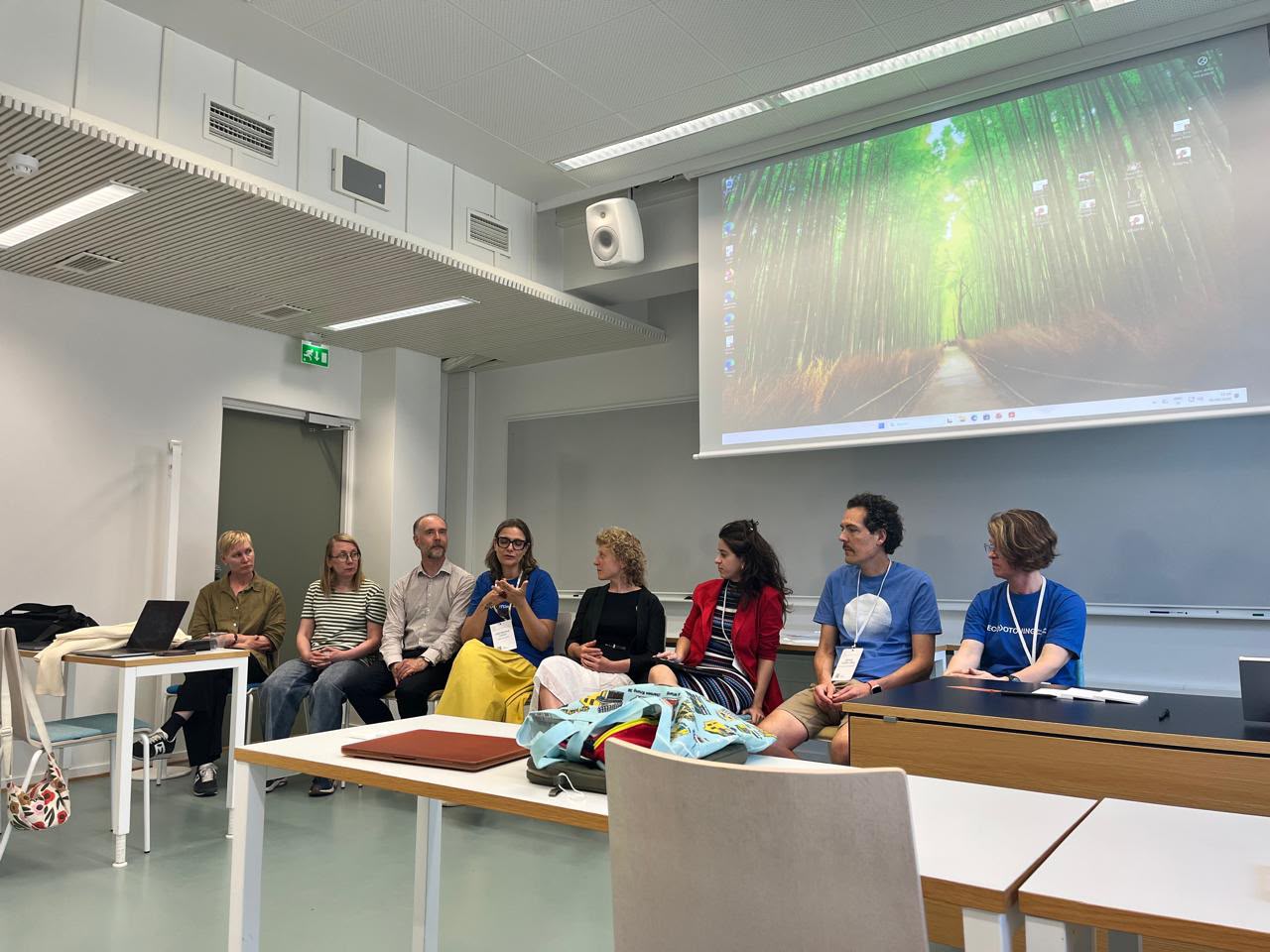







SMUS Core Partners Dr. Wiwandari Handayani (Diponegoro University, Indonesia), Dr. Inês Martina Lersch (Federal University of Rio Grande do Sul, Brazil) and Dr. Kundani Makakavhule (University of Pretoria, South Africa), together with Dr. Angela Million (SMUS director), organized a special session entitled “EC(h)OTONING Urban Futures” at the 6th World Planning Schools Congress, “Peripheral Visions”, hosted by the University of Helsinki, Aalto University and Tampere University from 29 June to 3 July 2026.
The session called for contributions exploring and extending the EC(h)OTONING concept, its methods, and its empirical basis, across different disciplines and diverse urban realities. Based on the primeval notion of “ecotone”, which denotes zones of transition between distinct systems, EC(h)OTONING brings to the fore how boundary dynamics are negotiated and spatial adjustments are realized in ecological, social, physical, and technological domains. Consequently, cities should no longer be conceived as systems that are susceptible to clear-cut problem diagnoses and definitive solutions. Instead, EC(h)OTONING evidences the complex interrelations between ecological, social and infrastructural dynamics. It therefore makes it possible to attend to ambiguous, transitional spaces and the way cities are affected by, and subsequently respond to, layered crises and downright technocratic interventions.
Against this backdrop, the session aimed to bring together papers examining how Wicked Urban Problems (WUP), such as climate disruption, infrastructure breakdowns, and migration, are dealt with in cities through iterative practices of plural resonance. Papers were selected based on their exploration of transitional zones (e.g. urban fringes, contested sites and hybrid infrastructures), their methodological experimentation (e.g. sensory mapping, co-creation, speculation, innovative mixed methods, and art-based research), and/or their adoption of more-than-human perspectives on urban transformation. The overall goal was to render the constant shaping of cities by frictions and fine-tunings visible, and to encourage critical reflection on how planning research and practice could engage with fluid, uncertain and relational spatialities rather than resorting yet againg to technocratic, formulaic certainty. The first of three rounds of paper presentations featured four contributions.(see the full list of papers below).
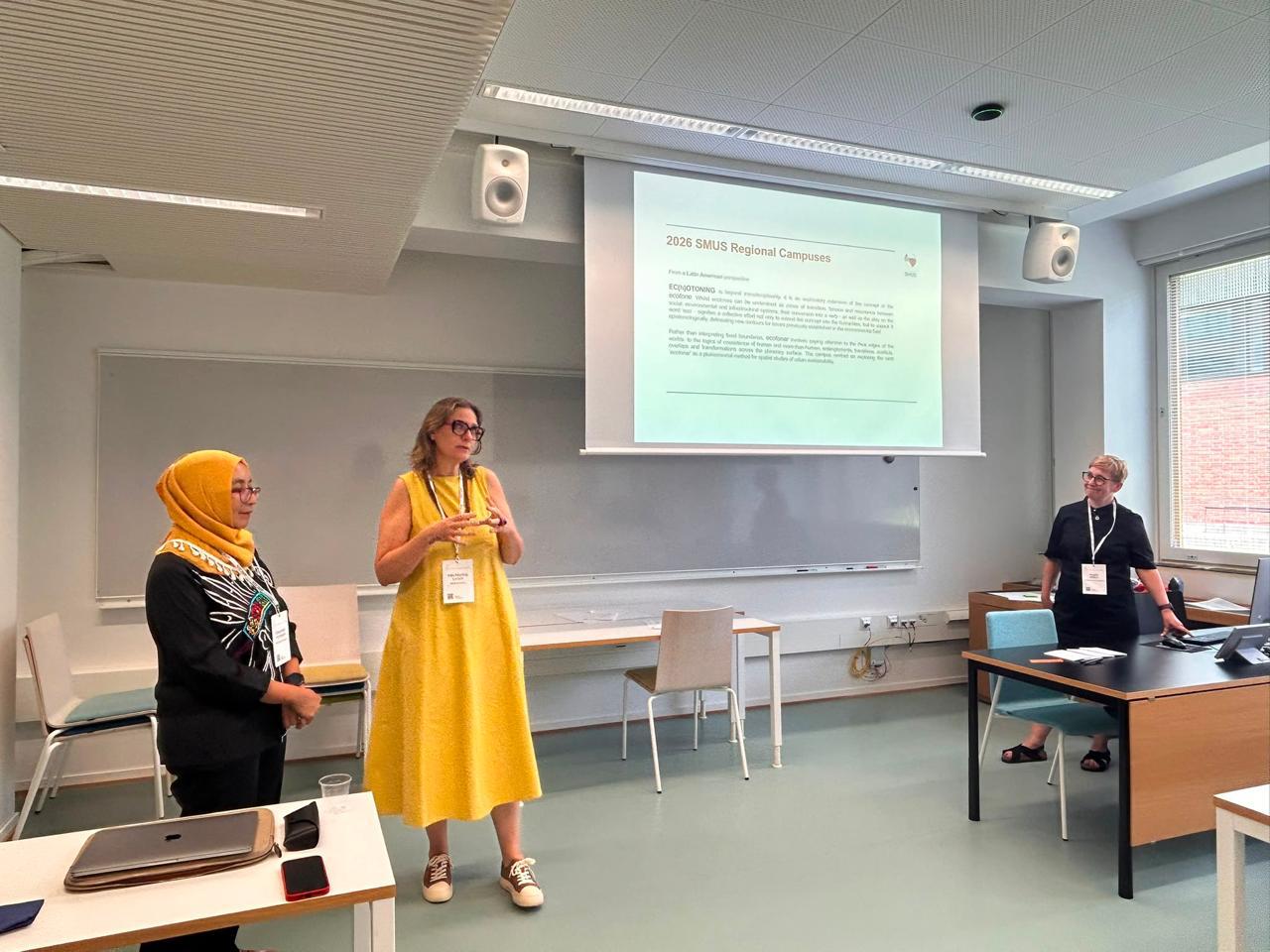
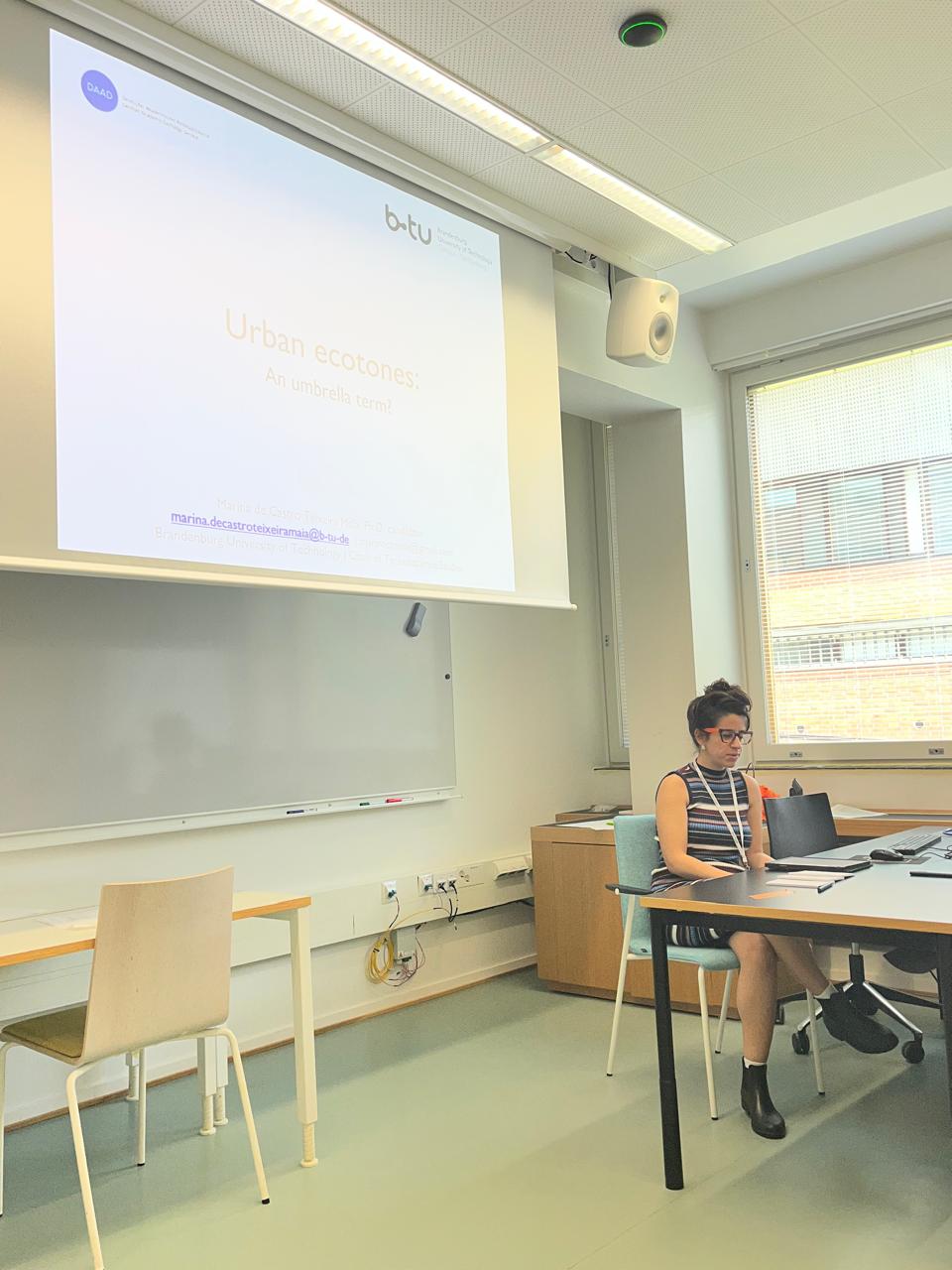
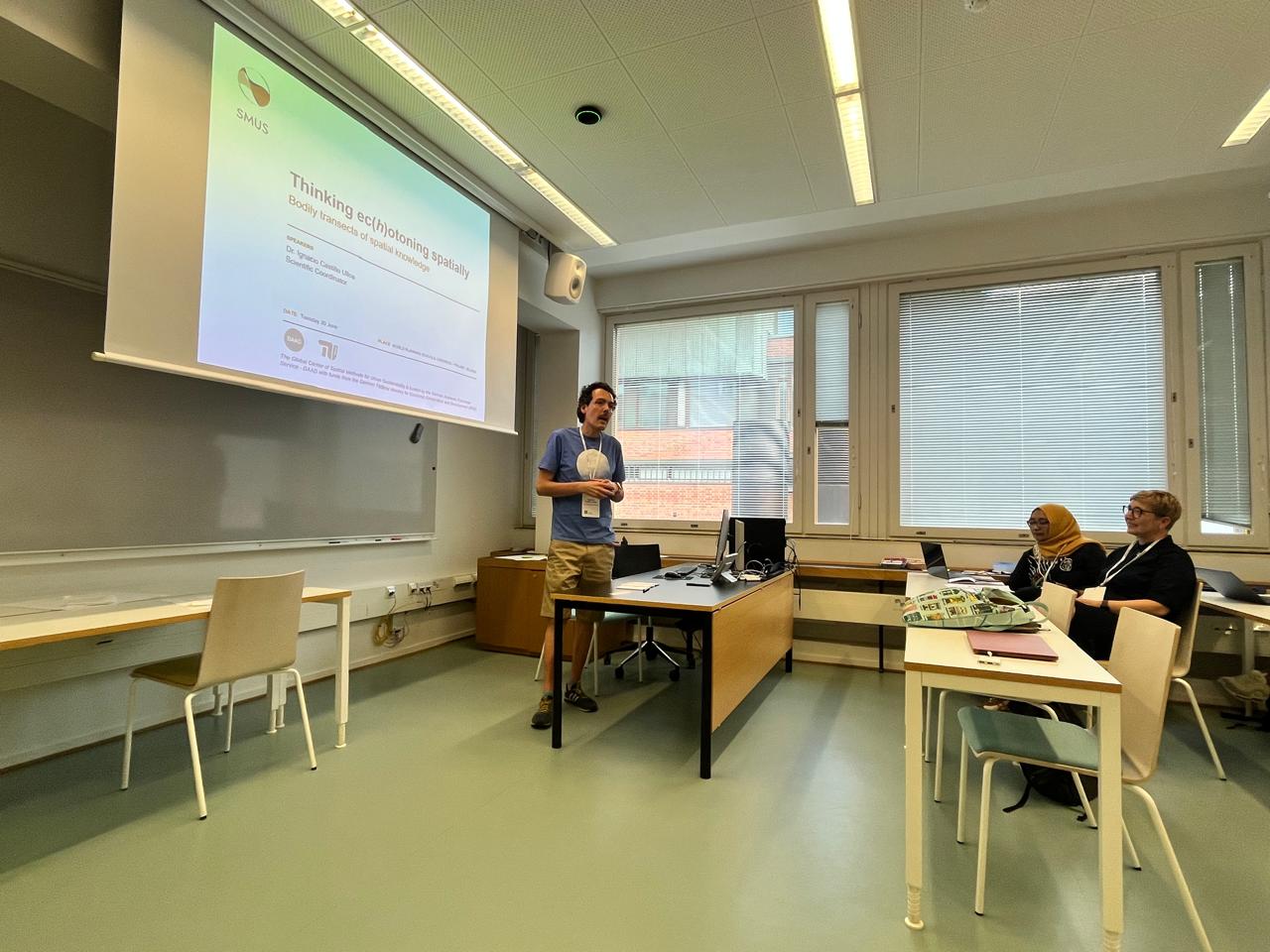
The session began with an introduction by Dr. Lersch, Dr. Handayani and Dr. Million, who offered an overview of the SMUS Center as well as the antecedents of EC(h)OTONING. Marina de Castro Teixeira Maia, a doctoral candidate at the Brandenburg University of Technology Cottbus-Senftenberg, then raised the issue of “urban ecotone” becoming a reductive umbrella term. She pointed out that, while the concept of “urban ecotone” may facilitate interconnections between knowledge fields and give way to inventive analyses, caution and theoretical rigour are required when using umbrella terms, given their transversal epistemic nature. Questioning whether ecotone in urban studies offers new insight or merely presents the systemic paradigm anew, de Castro Teixeira Maia ultimately concluded that, far from decisive rebuff, the ultimate goal should be critical reflection. Next, Dr. Ignacio Castillo Ulloa, SMUS scientific coordinator, argued that notions such as “ecotone” have conceptual power and potential because they reveal analytical and interpretative possibilities. Assuming that the knowledge EC(h)OTONING betokens is invariably spatial, and accentuating the role of the body, he introduced the transect walk method to make the spatiality of EC(h)OTONING both visible and apt for research. To illustrate these points, Castillo Ulloa presented his ongoing research on homelessnes as “living in (spatiality of) the intensive order” in a district of Berlin. Through “ethno-jogging”, a variant of the transect walk method, this research evinces the conceptual and methodological significance of the lived body, and how bodily transects of spatial knowledge emerge out of the explorations of ecotone-like situations. All in all, the Castillo Ulloa urged that EC(h)OTONING should not be reduced to just one more mode of spatial thinking. Instead, it should serve as an entry point for finding alternatives that can inform and enhance practice in areas ranging from policymaking to master planning to design.
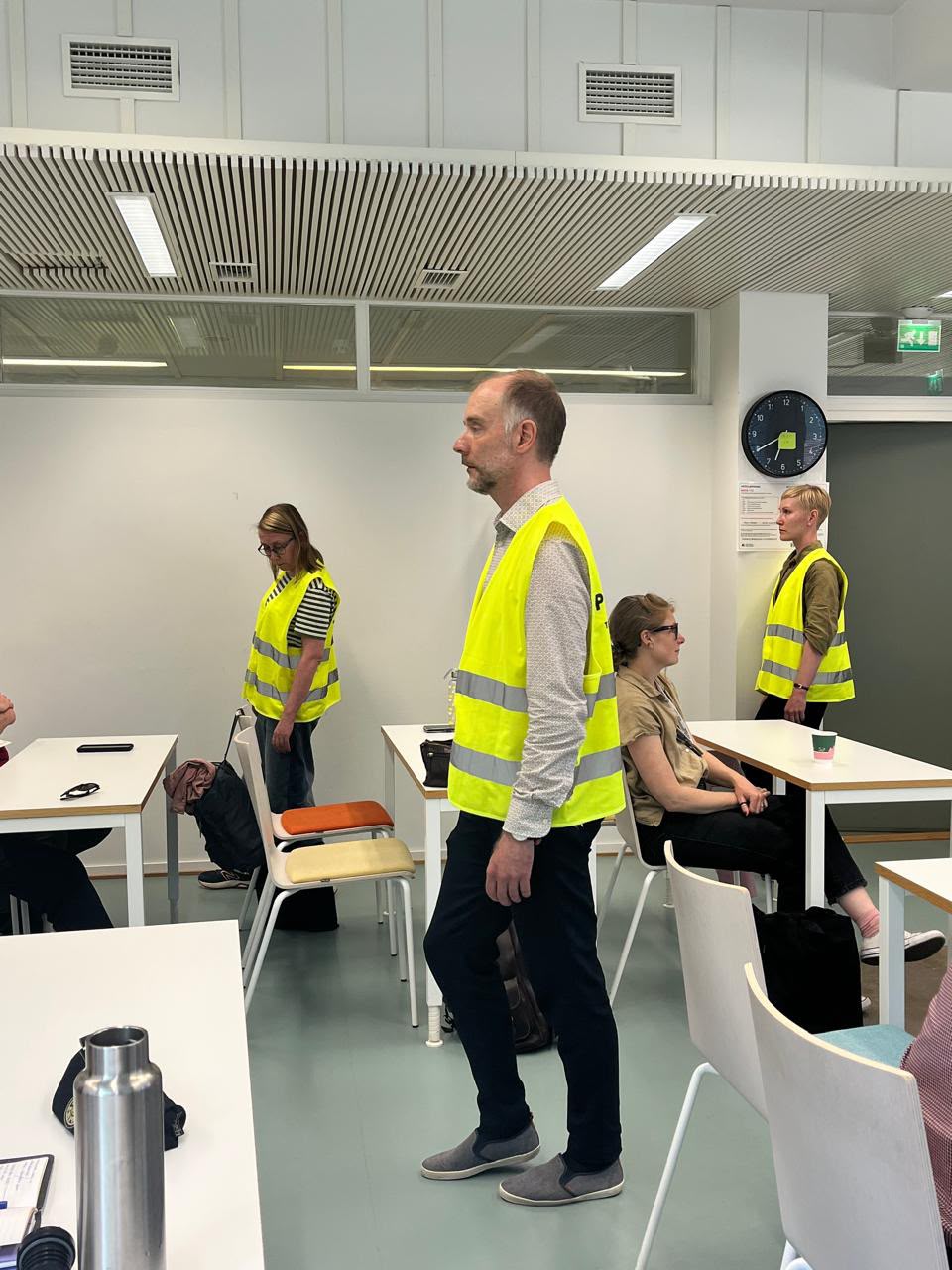
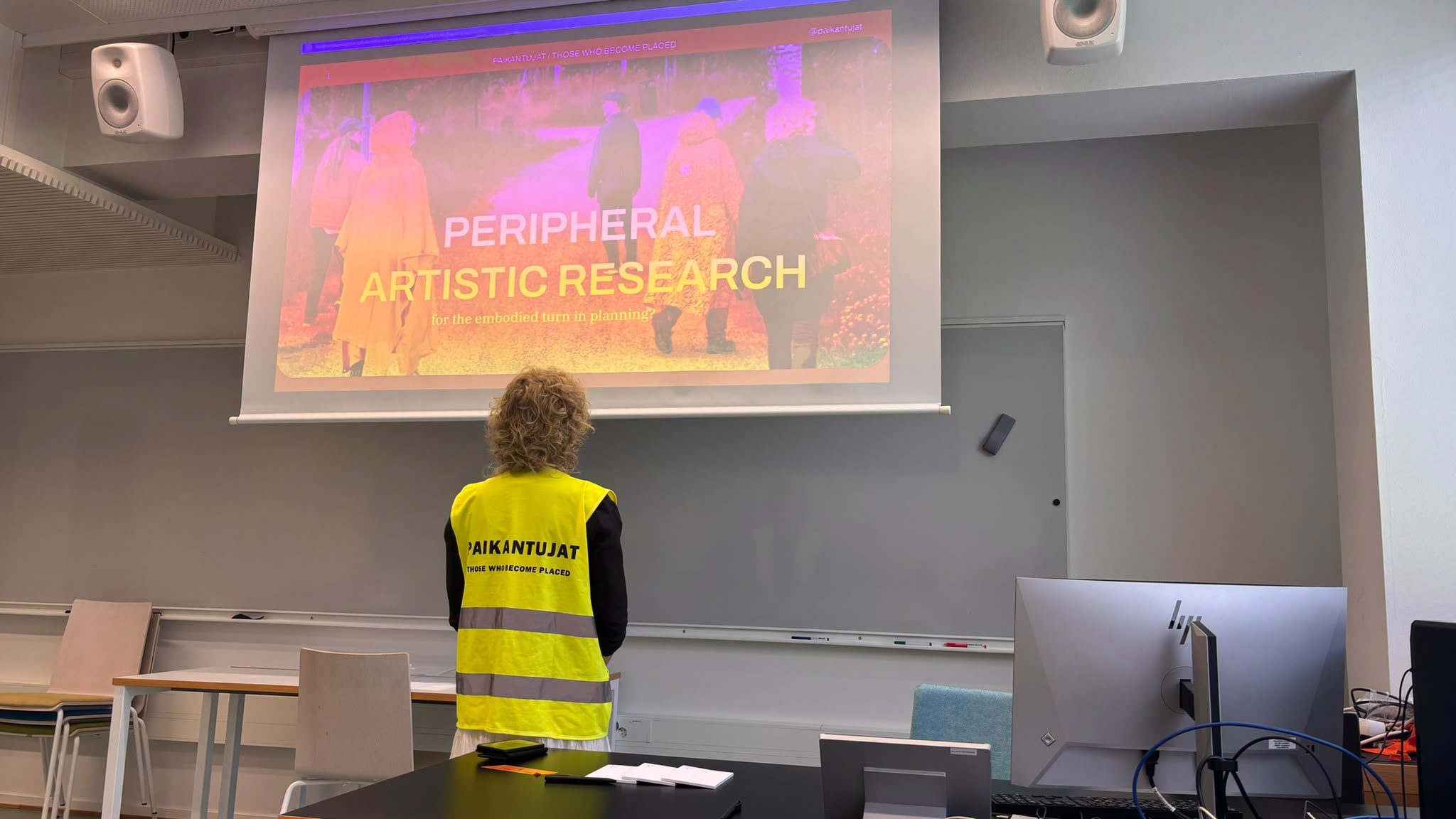
As a manifest counterpoint to the “typical” conference presentation format, these two contributions were followed by a dance performance by architect and researcher Alina Alatalo (Insurgent Spatial Practices collective), dancers Hanna Kahrola, Tuija Touhunen and Anna Kupari (FEMA collective), choreographer and ethnographer Jaakko Simola, and screen dance artist Mia Tiihonen. Through such an heterodox approach, the presenters-performers demonstrated how artistic research can substantively inform the so-called “embodied turn” in planning. Interpolating dance movements and short aloud readings, excerpts were presented from a research project in the Hiedanranta district of Tampere, Finland, to make evident the ways activistic dance and spatial research can coalesce. This work combines conscious movement exercises and practices that challenge existing norms to explore a peripheral urban context undergoing intensive and rapid scale change. It therefore unfolds empirically on the threshold of a frightening new liminal state, which appears to be as much chaos as a phase of change bearing the seeds of a better future. Overall, the presentation-performance sought to show that dancers’ expertise can indeed aid to develop scientific methods for understanding embodied knowledge and spatial experience. This knowledge, moreveor, may be integrated into guidelines for urban planning and local place-making.
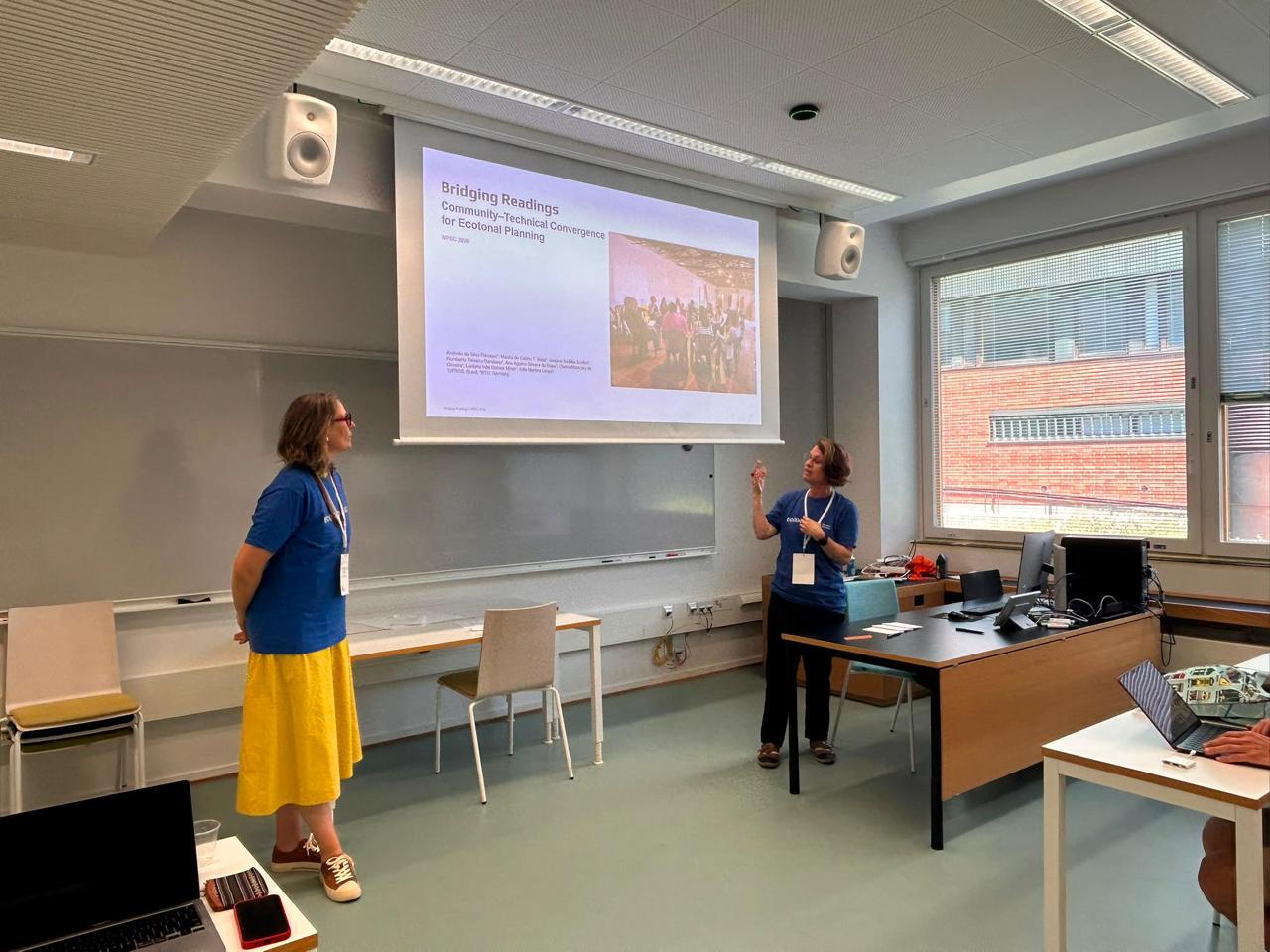
The fourth and final input was delivered by Dr Inês Martina Lersch and Dr. Luciana Miron (Federal University of Rio Grande do Sul, Brazil). They elaborated on the practical and methodological potential of EC(h)OTONING in the context of “fine-tuning boundary conditions”. To this end, a case study set in a flood-affected, low-income area of Porto Alegre, which involved around 25 students and professors from UFRGS, was presented. A convergence-divergence map was produced by overlaying a “community reading” (based on participatory workshops) and a “technical reading” (based on public datasets) across diverse thematic layers (urban infrastructure, urban mobility, urban facilities, public services, cultural heritage, and popular demands) to determine where housing should be provided and improved. To conclude, Lersch and Miron observed that, within the “testing” case study, ecotonal conditions are seen as localized frictional transitions that reveal the existence of misaligned socio-ecological, institutional, or infrastructural boundaries. Accordingly, the frictions causing these divergences can be used to assess the “ecotonal degree” of the analytical practices and categories discussed in the literature. Methodologically, Lersch and Miron’s work draws on epistemic reflexivity to identify ecotonal boundaries, as well as to frame EC(h)OTONING as a stabilizing process between everyday practices and the provision and consumption of public services, and the deployment of spatial devices.
Titles of paper presentations | Presenters + authors:
- Urban ecotone: an umbrella term? | Marina de Castro Teixeira Maia
- Thinking ec(h)otoning spatially: Bodily transects of spatial knowledge | Ignacio Castillo Ulloa
- Peripheral artistic research for the embodied turn in planning | Elina Alatalo, Hann Kahrola, Tuija Touhunen, Anna Kupari
- Bridging readings: Community-technical convergence for ecotonal planning | Andriele da Silva Panosso, Luciana Miron, Marina Marina de Castro T. Maia, Josiane Andréia Scotton, Ana Aguirre Silveira da Silveira da Rosa
Titles of all accepted papers | Presenters + authors:
• Healing the city: Ec(h)otoning urban futures through Daoist environmental psychology | Adina-Iuliana Deacu
• Social meanings of land in Sayung, Indonesia coastal area ecotone: A Q-Methodology Approach | Bintang Septiarani, Walter Timo de Vries, Wiwandari Handayani, Iwan Rudiarto
• Harmonizing Nature-based Solutions and grey infrastructure in coastal ecotones: Insights from Wonokerto, Indonesia | Retno Sari Dewi, Wiwandari Handayani b, Jenia Mukherjee
• Multi-Species-Mapping as Design Tool | Julia Koepper
• Cartographies of socioecological landscapes integrating design and ethnography for green-blue infrastructure in urbanizing territories – A case study of Can Tho, Vietnam | Boaz Peters, Fransje Hooimeijer, Taneha Kuzniecow Bacchin
• Upstream waste management in motion: Ec(h)otonal dynamics in peri-urban area of Semarang city – Indonesia | Mega Anggraeni, Wiwandari Handayani, Feri Prihantoro
• Making Mérida’s urban landscape viable: Can regenerative landscape-based proposals turn wicked peripheral urban expansion into ecotones? | Benjamin N. Vis
• Shaping urban futures from the uplands: An ecotone perspective on water balance and water governance in Ciliwung Cisadane river basin | Intan Hapsari Surya Putri, Wiwandari Handayani
• Ec(h)otoning planning and governance in the border region: Ecotone as an approach to regional development in Indonesian cities | Iwan Rudiarto, Wiwandari Handayani, Tia Dianing Insani, Elisa Rahma Putri