






The SMUS Action 4, Science-Policy Interface, places the emphasis on trying out alternative ways for researchers-scientists to collaborate more substantively with practitioners and other societal actors in development cooperation. Inventive collaborative formats can be developed through transdisciplinary imagination and a changeover from practice-based research (obtaining new knowledge by partially drawing on both the means and outcomes of a specific practice domain) to practice-led research (concerned with the intrinsic nature of a practice domain, seeking the production of novel and operative knowledge for that very practice). Such a transition would require revisiting and reshuffling long-standing attitudes and deep-seated conventions in both academic-scientific research and practical professional work. This is especially valid for those related to methods and tools used to produce the knowledge meant to serve as the bedrock for policymaking. Likewise, to harness the input of citizens, and in so doing render it legitimate and valuable, researchers-scientists and practitioners alike ought to rethink the participatory instances they have traditionally relied on for more fruitful collaboration to thrive. By coalescing various forms of knowledge production, modes of inquiry and worldviews, a coherent – rather than a homogenous unified – knowledge base can be achieved, which turns out to be much more adequate to tackle Wicked Urban Problems (WUP). Challenging prevailing research methods and approaches as well as decision-making mechanisms are meant to trigger a necessary shift in policy focus towards one that recognizes the distinctive groundedness that underlies WUP.
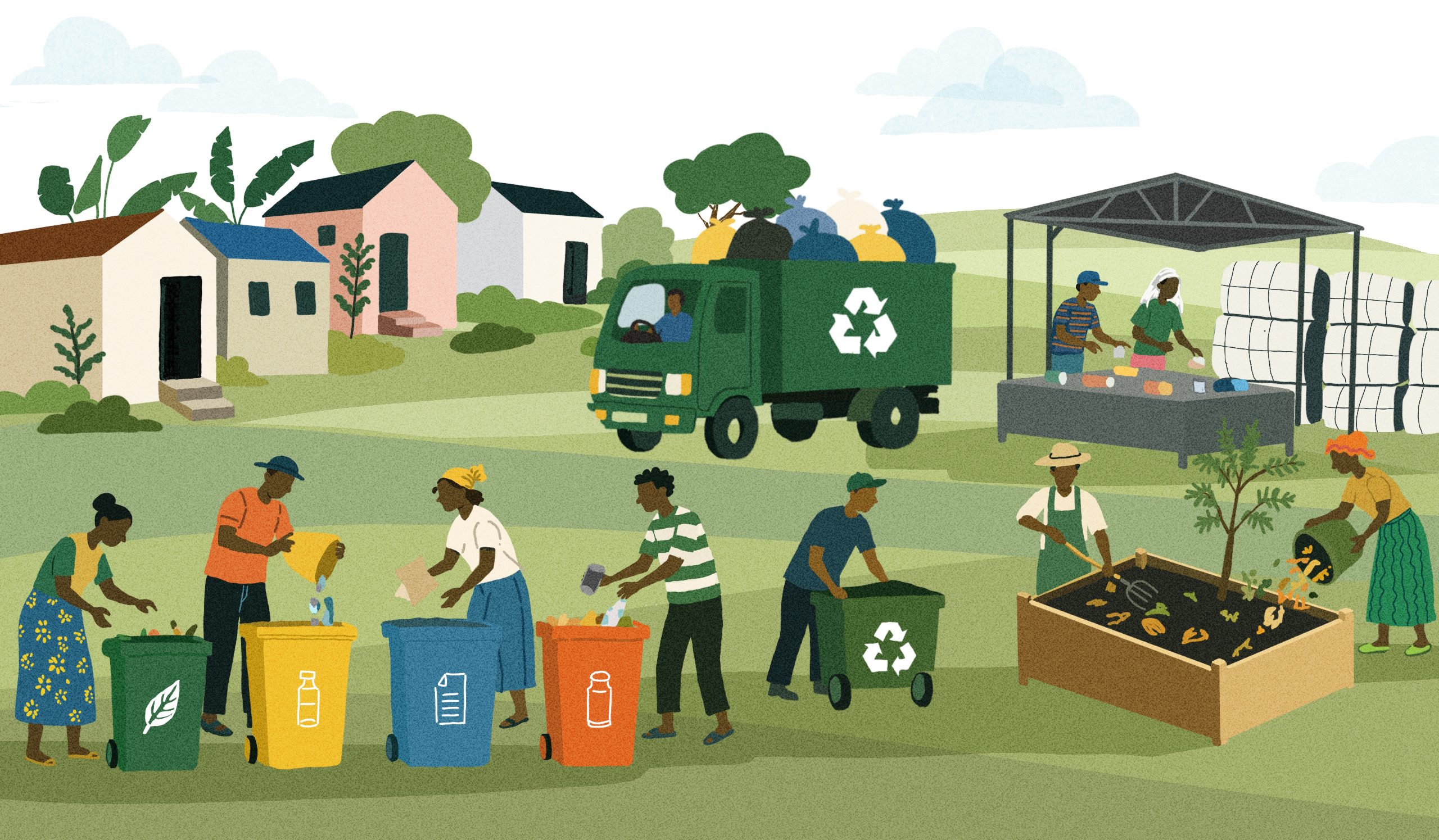
In this context, the University of Dar es Salaam (UDSM), an SMUS core partner, is carrying out a pilot project on waste management called “Addressing wickedness at source: Solid waste sorting in low-income urban areas of Tanzania”. The project is directed by Dr. Frank Edward (scientific lead) and Dr. Lightness Kokwijuka Herman (co-pilot), in collaboration with researchers Boniface Kyaruzi (National Environmental Council of Tanzania) and Nichalaus Batakanwa Charles (UDSM).
Further details about the pilot project are found here “Addressing wickedness at source : Solid waste Sorting in low-income urban areas of Tanzania“