






Nikita Konwar Gogoi
Urban areas across the Global South are facing mounting challenges in solid waste management (SWM), and Tanzanian cities are no exception. Rapid population growth, extended commercial activity, and expanding informal settlements have increased municipal solid waste generation, while collection and disposal systems have failed to keep pace. In low-income settlements like Misewe Street in Dar es Salaam, waste is often disposed of without sorting at the source or at the dump sites. This limits opportunities for recycling, repurposing, and reuse, which in turn contributes to environmental and public health risks, including poor air quality, carbon emissions, waste fires, pollution, disease, and the degradation of urban ecosystems.
A significant fraction of urban waste consists of recyclable materials, such as plastics, metals, glass, and paper, as well as organic materials that can be repurposed into useful products. However, a lack of structured waste separation at the household and community levels causes these materials to become mixed with organic and hazardous waste, thereby reducing their recovery potential and increasing pressure on disposal sites. This situation is exacerbated by weak municipal governance, limited financial resources, inadequate SWM infrastructure, and cultural and behavioral barriers to waste sorting. This approach to waste management is environmentally and socially unsustainable. It contributes to methane emissions, fires, pollution, health risks for waste workers, and poor living conditions around Pugu Kinyamwezi, the city’s only landfill.
Evidence from Tanzania and other countries shows that SWM challenges are particularly severe in low-income and informal settlements. This pilot project addresses these challenges through practice-led research and interventions on Misewe Street in Dar es Salaam’s Ilala district. By examining barriers to sorting specific to place and class, the project establishes and strengthens waste separation at the household and community levels. Additionally, raising awareness and introducing best practices are vital elements to providing participants with appropriate household and community sorting facilities. Furthermore, the project is intended to empower residents to participate in a local circular economy through recycling, repurposing, and reuse, while engaging local and municipal authorities in improving SWM governance. Findings from the intervention will inform policy briefs that promote sustainable SWM practices.
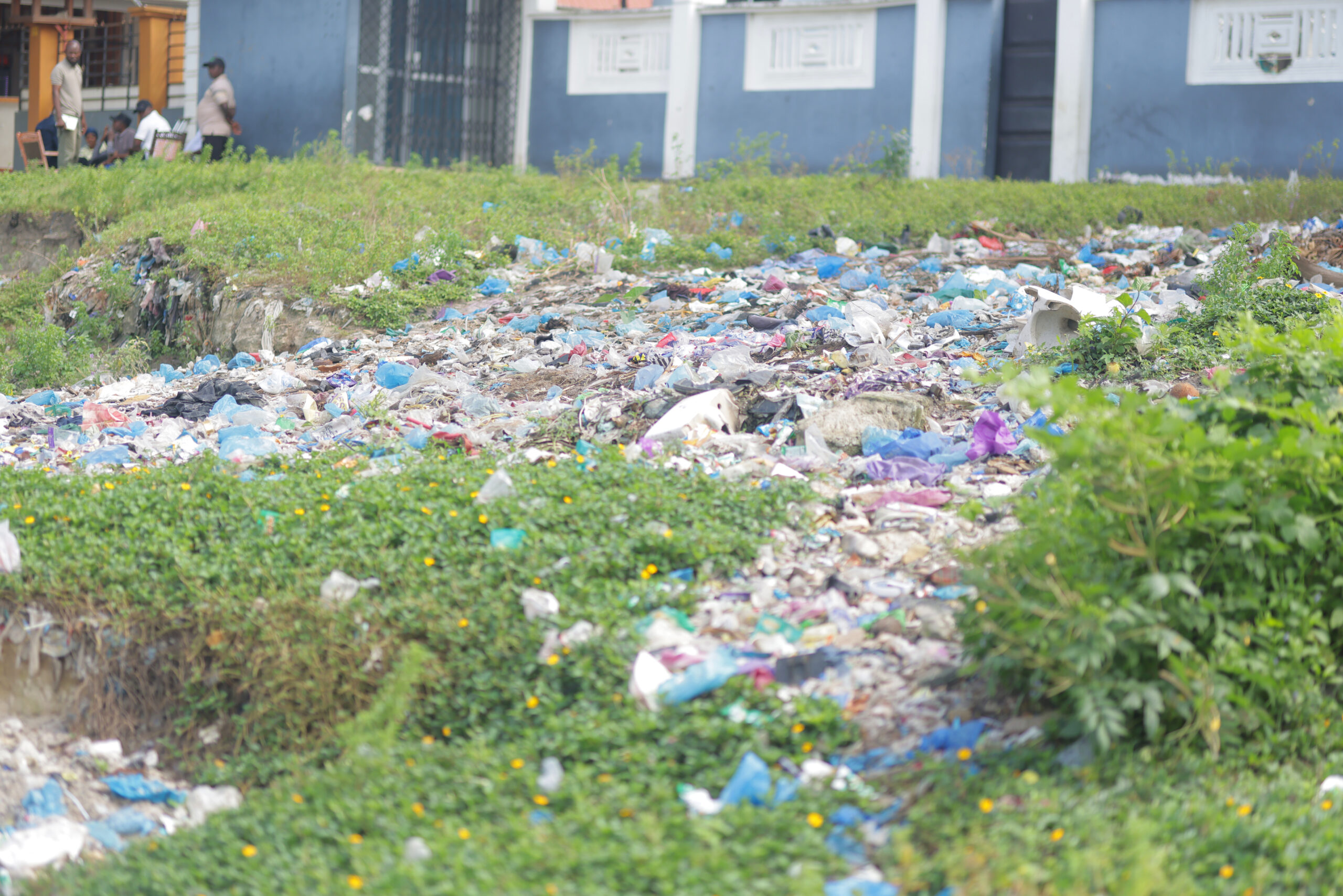
Project Site at Misewe Street © Mark Maganja, Project Videographer, 14.06.2026
The pilot project directly tackles two targets of the Sustainable Development Goal #11, Make cities and human settlements inclusive, safe, resilient and sustainable (see Figure 1). Target 11.6 is addressed by reducing the environmental impacts in cities through improved waste management and air quality. Target 11.3 is pursued by engaging community members and the local government in planning, implementing waste separation, and enabling residents to benefit from circular economy activities. As the first initiative to introduce source separation systematically in an informal, low-income urban area of Dar es Salaam, the Misewe Street case provides actionable knowledge for sustainable SWM and serves as a model for similar interventions in other urban areas. Ultimately, the pilot project aims to improve environmental conditions, strengthen community and municipal practices, and demonstrate a locally appropriate approach to sustainable SWM.
Target 11.3 (Figure 1)
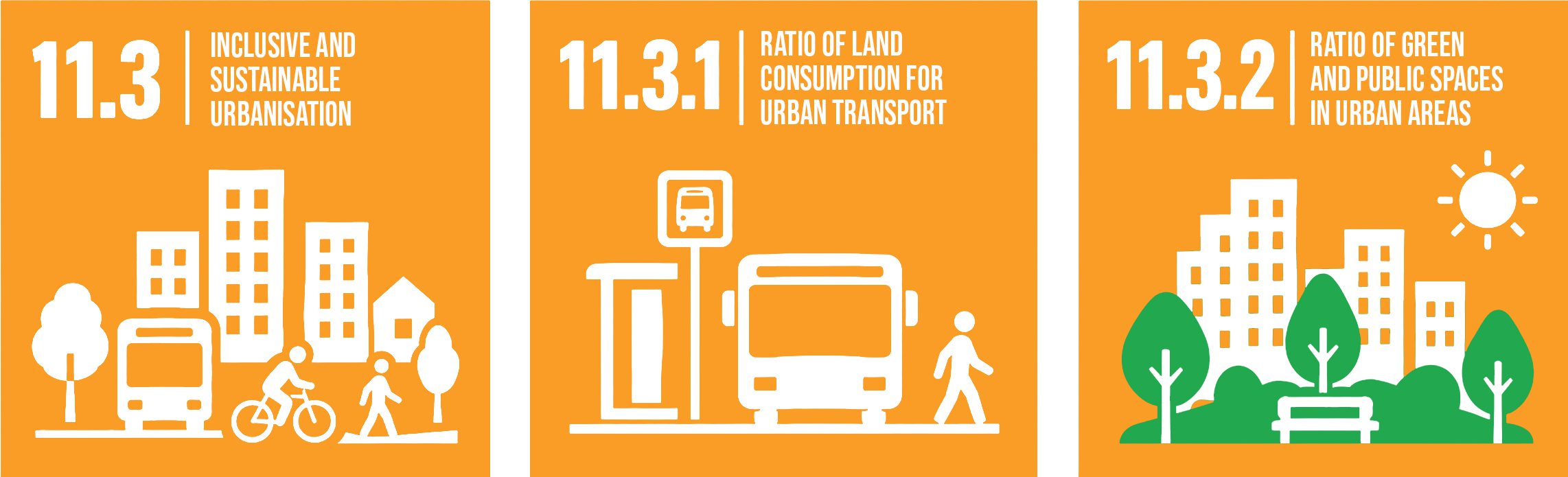
By 2030, enhance inclusive and sustainable urbanization and capacity for participatory, integrated and sustainable human settlement planning and management in all countries.
Target 11.6
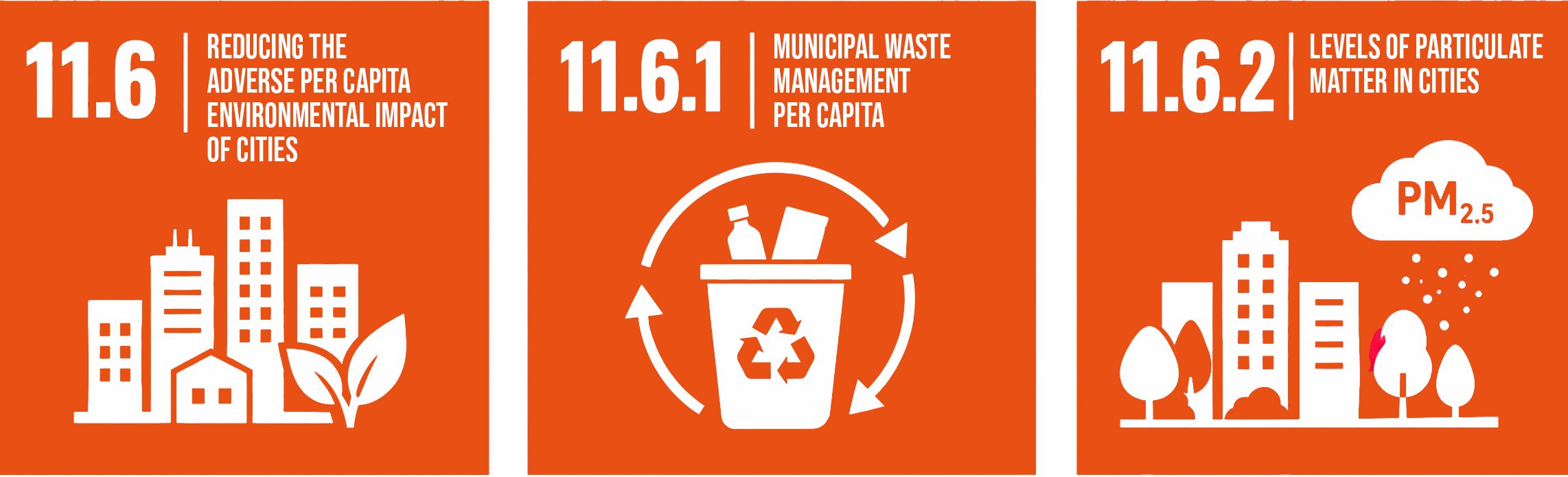
By 2030, reduce the adverse per capita environmental impact of cities, including by paying special attention to air quality and municipal and other waste management.
SDG #11 targets addressed by the pilot project.©https://sdgs.un.org/goals.
©Illustrated by Nikita Konwar Gogoi
The pilot project is being implemented on Misewe Street, an informal settlement located in the Liwiti ward of the Ilala district in Dar es Salaam (see Figure 2). Misewe has approximately 600 households and 15700 inhabitants. The project brings together local government leaders, community members, academic researchers from the University of Dar es Salaam, and representatives from the National Environmental Management Council, the German Agency for International Cooperation (GIZ), non-governmental organizations (NGOs), and waste transportation and recycling companies. Through this collaborative effort, solid waste management – seen as wicked urban problem unfolding on Misewe Street – is expected to improve significantly. The project outcomes will consequently provide transferable lessons for similar approaches in other Dar es Salaam streets, urban Tanzania, and the Global South. Two hundred households will participate in the project.
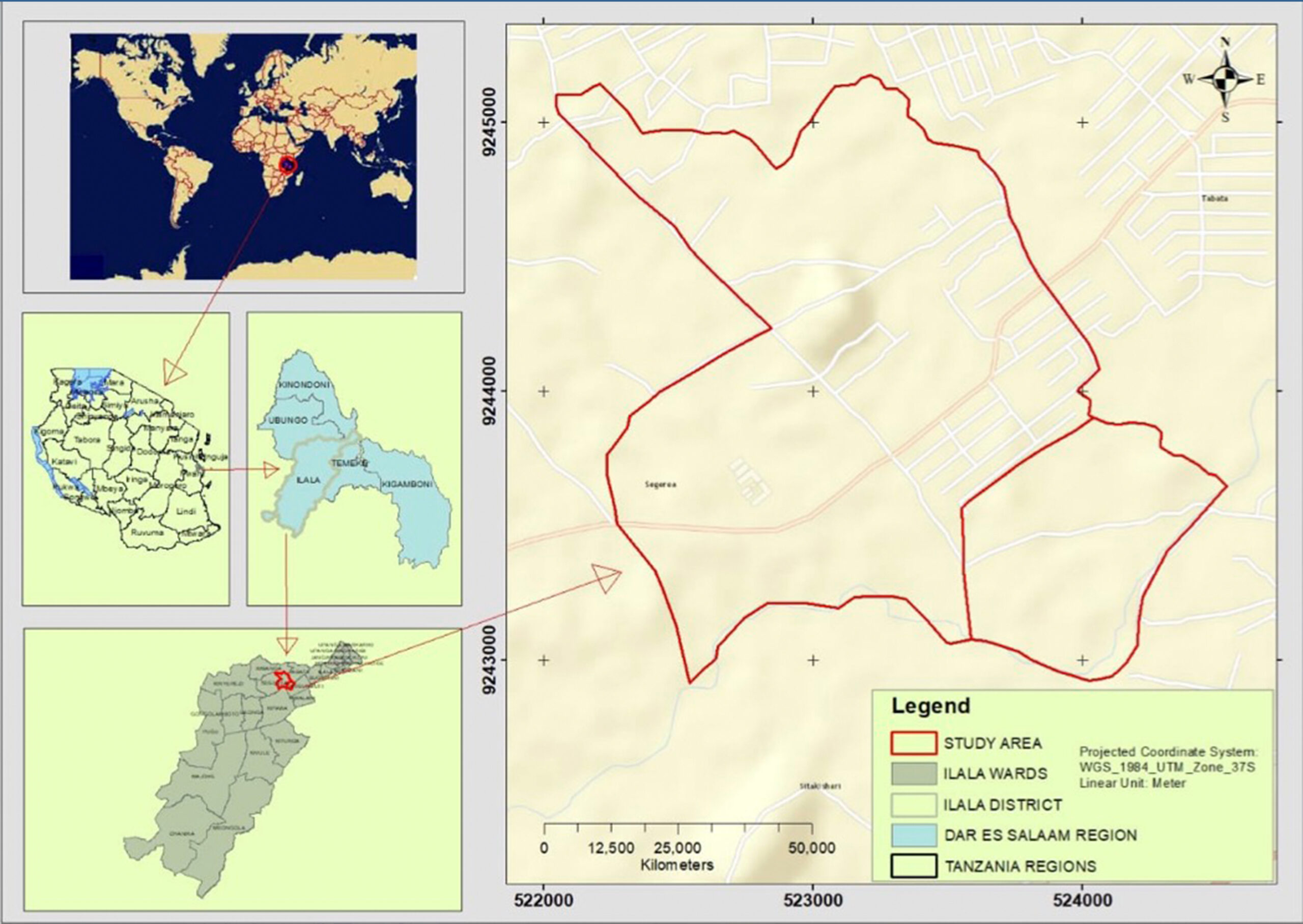
Misewe Street, Ilala Municipal, Dar es Salaam, Tanzania (Figure 2). © Nicholaus B. Charles.
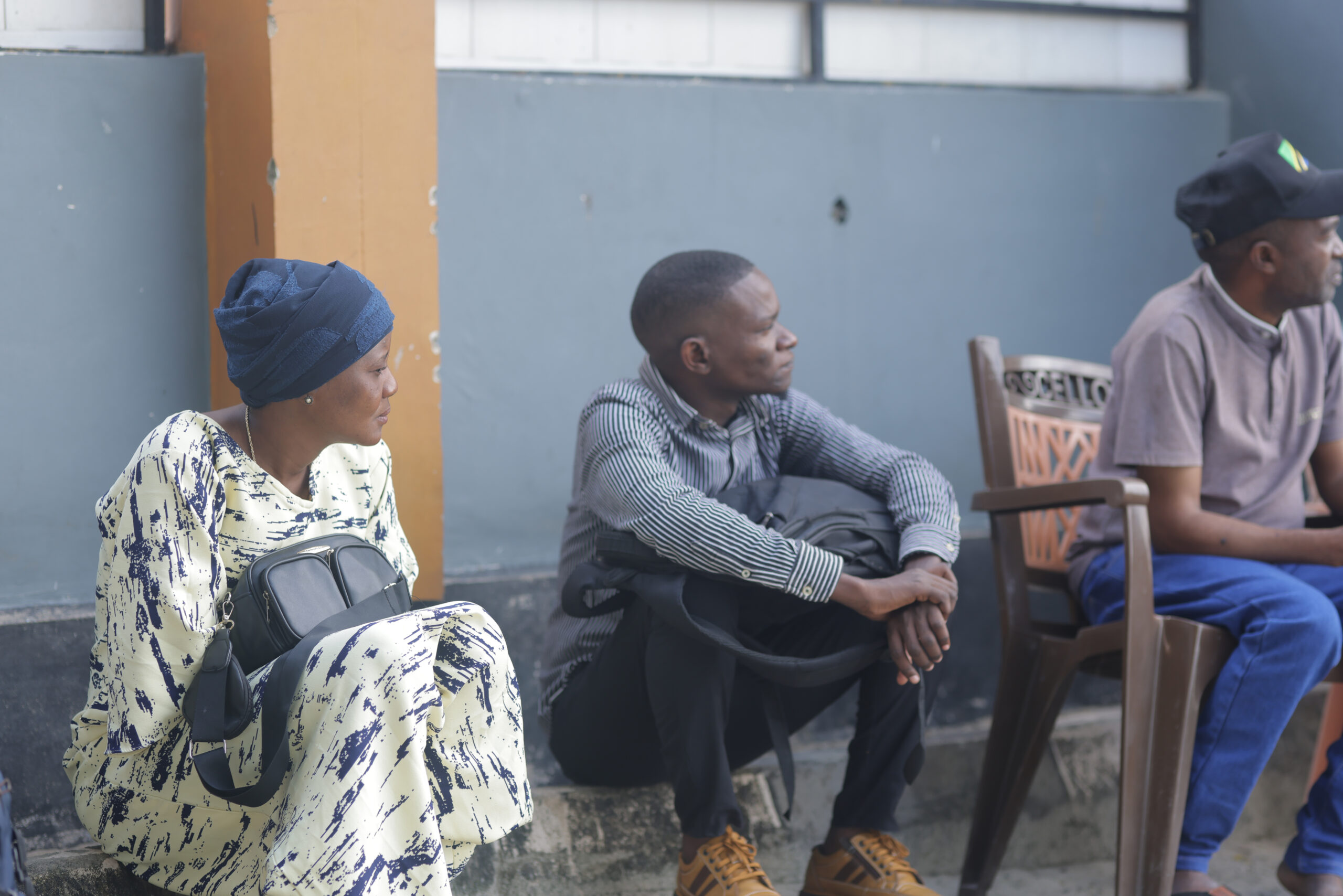
Misewe Street local government leaders listening attentively during the discussion on the project of solid waste sorting.© Mark Maganja, Project Videographer, 14.06.2026
For purpose of executing the pilot project, solid waste management in low-income settlements is defined as a Wicked Urban Problem (WUP) due to its persistent negative effects on human health and the environment. Poor waste management contributes to illegal dumping and the growth of informal landfills, which worsens environmental degradation. These challenges are particularly acute in densely populated settlements, where closely built housing generates substantial amounts of waste, but limited collection services leave much of it uncollected. Consequently, residents face heightened health risks, including diseases such as cholera and diarrhea, which are associated with inadequate waste management.
In response, the pilot project seeks to promote effective, context-sensitive waste management, with a strong emphasis on reducing waste through source separation. By introducing and supporting sorting practices, the project aims to encourage sustainable behavioral changes and demonstrate that waste can be a resource rather than merely a burden. Separated materials will be collected, recycled, and reintegrated into local economies, creating livelihood and employment opportunities for low-income residents, particularly women and youth. Action-oriented approaches are deployed to this end, including community awareness campaigns, practical training, the provision of appropriate and user-friendly equipment, and monitoring mechanisms to sustain participation. These interventions are intended to improve waste management and strengthen community ownership and engagement.
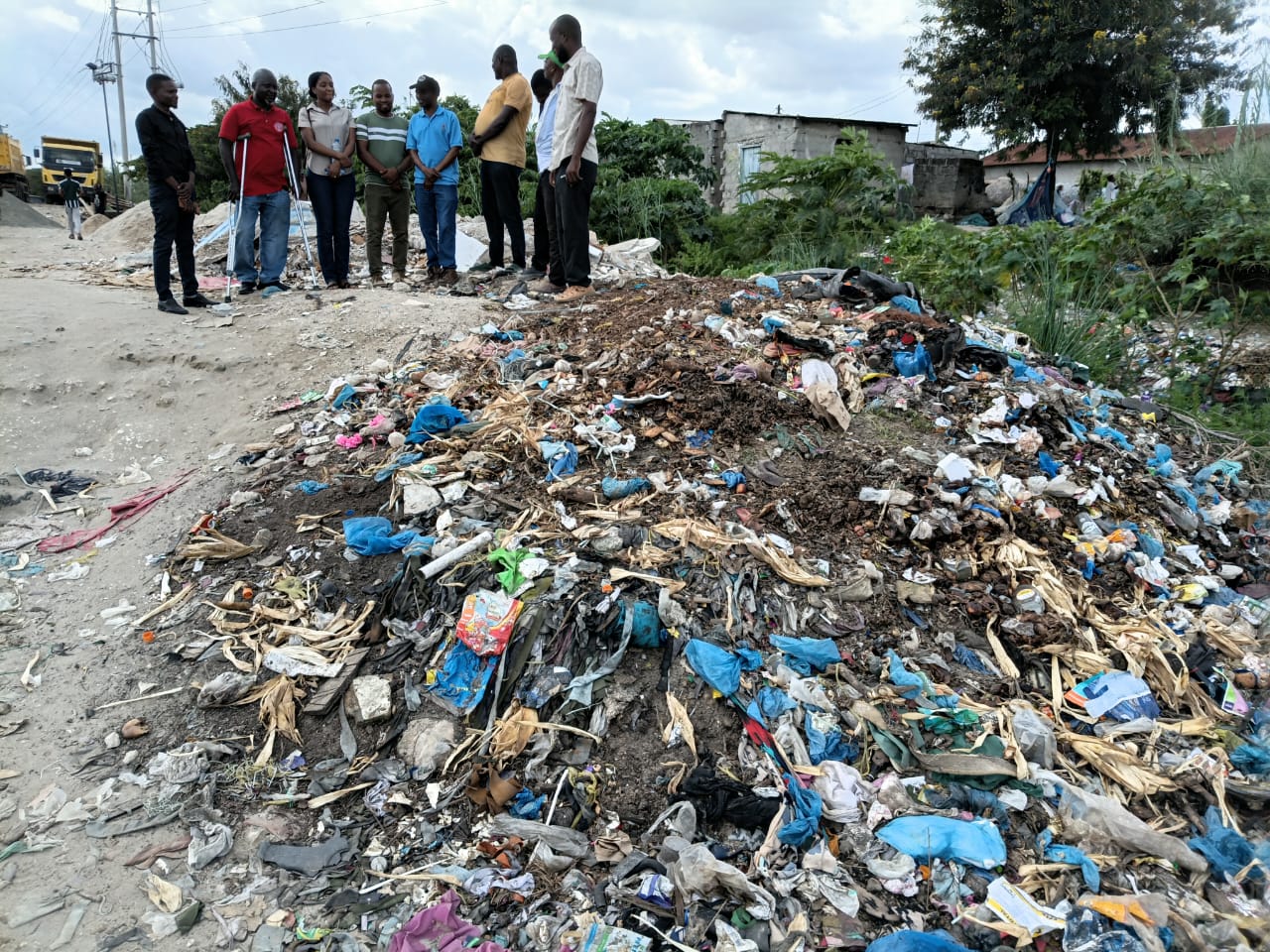
Project site survey: Project researchers and local government leaders for Misewe Street ©Boniface Kyaruzi, Project Researcher, 16.05.2026
The pilot project has both scientific and empirical relevance, for it serves as a platform for bridging science and policy, and theory and practice. Rather than following conventional academic approaches, it generates knowledge through practice and lived experience.
In implementation, the project demonstrates a circular economy approach to solid waste management (SWM) by focusing on waste diversion through recycling, repurposing, and reuse. It also engages directly with the complex realities of urban waste and generates practical outcomes that can inform local governments on how to adopt and tailor sustainable SWM systems. These systems can contribute not only to environmental sustainability and climate-change mitigation, but also to employment creation and income generation for participating communities. By reframing unrestrained solid waste production and mismanagement as a Wicked Urban Problem, waste is regarded as a valuable resource rather than a nuisance. Moreover, collection points will showcase innovative waste management models that go beyond conventional methods of tipping, burning, and burying. Compost produced from organic waste will be used for household gardening.
Scientifically, the project provides valuable information for implementing practical knowledge and developing theory. Source separation and processing for recycling, repurposing, and reuse aid in reducing methane emissions and waste toxicity. In collaboration with GIZ Tanzania, the project is being implemented in a low-income and informal area to produce empirical data for comparing solid waste management (SWM) practices in low- and high-income communities, including household-level waste volumes across different urban contexts.
The pilot project methodology comprises two components: empirical research and the implementation of a waste management model from the source to final disposal. The research examines the challenges of sorting solid waste in low-income urban areas at the household, market, institutional, and communal levels. While existing waste sorting and processing initiatives have largely focused on affluent areas, low-income, densely populated, unplanned, and informal settlements have been understudied. These communities produce substantial volumes of waste and frequently lack suitable collection and disposal systems.
Against this background, the project employs qualitative and quantitative methods to understand, measure, document, and evaluate waste separation by type at the source. Through routine observations, complemented by interviews with residents and other stakeholders, household and communal sorting infrastructure and practices are determined. In addition, selected households will fill out structured questionnaires to evaluate their knowledge, attitudes, and behavioral changes. Furthermore, the frequency of waste collection is monitored, and the volume of collected waste is measured in cubic meters using specially designed communal collection containers.
In view of time and financial resources availability, the project involves 200 households located on Misewe Street. Four researchers are to monitor 50 households in collaboration with the local community leadership. The researchers will share monthly reports to compare progress, verify and validate information gathered, and identify emerging challenges. Moreveor, photographs and video recordings are used to document spatial and behavioral changes in waste management throughout the project. These audiovisual materials will be used to create an open-access video documentary showcasing the project’s implementation and outcomes.
Technical procedural tasks include measuring waste volumes, estimating potential methane reductions, mapping spatial and attitudinal changes using GIS, developing questionnaires and interview guides, managing the project, and writing reports. All in all, this integrated methodological-procedural approach generates evidence on the feasibility of sustainable, source-based waste management in low-income urban communities and provides a model that can potentially be replicated elsewhere.
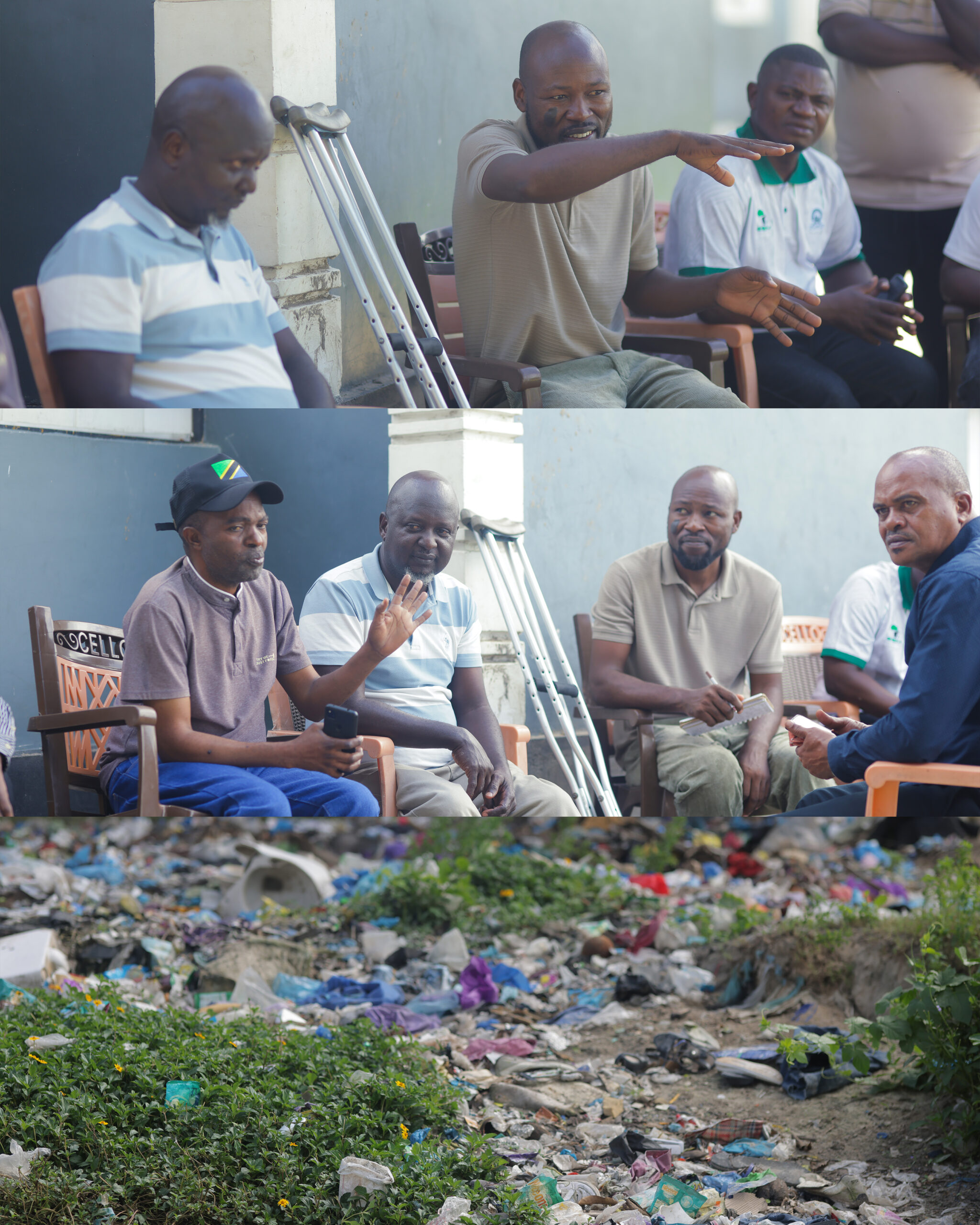
Charles.Consultative meeting between local government representatives, site neighbours and project researchers at Misewe Street overlooking the project site. ©Mark Maganja, Project Videographer, 14.06.2026
At the community level, permanent solid waste management (SWM) infrastructure will be established and transferred to the street government for management. Community participation will be strengthened by providing training in management and documentation to selected participants, especially women and people with disabilities. These efforts are expected to foster sustainability, participation, employment, empowerment, and inclusion.
At the scientific level, project reports will be submitted to the DAAD via SMUS Berlin and to GIZ through its Tanzania country office. These reports will also be shared with contacts at the National Environmental Management Council and the relevant ministries responsible for local government and the environment. Additionally, the four researchers will also submit an article to a policy journal to disseminate the project’s action-based findings to the academic community. A documentary containing social media links will be published on SMUS and YouTube for a broader audience.
To promote policy impact, the project will produce a policy brief summarizing key findings and translating them into actionable recommendations for sustainable solid waste management (SWM) in Dar es Salaam and beyond. The brief will encompass gaps in SWM systems in low-income settlements and propose inclusive strategies that reflect local socio-economic conditions. To promote a dialogue on sustainable and inclusive SWM, concise recommendations will be sent to relevant government ministries, including those responsible for local government, housing, land, and the environment, as well as to development partners such as GIZ.