


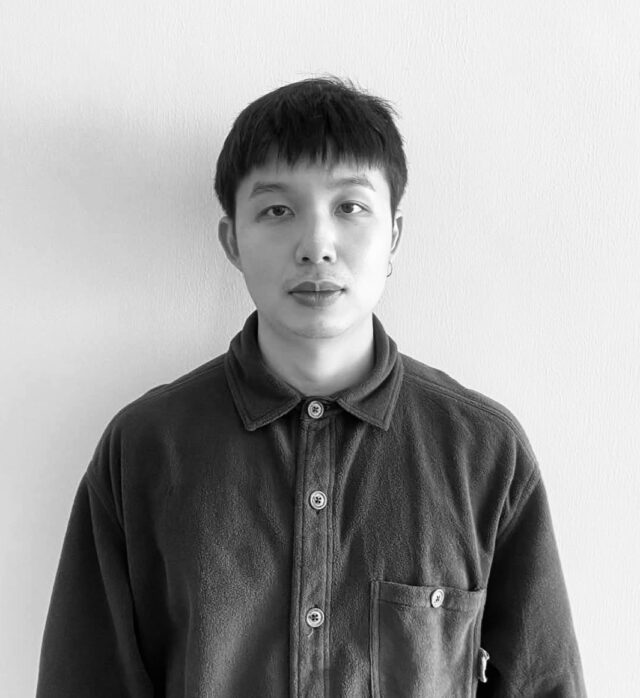
Biography: Piyathep Tanmahasmut is a doctoral student at the Institute for European Ethnology (IfEE), Humboldt-Universität zu Berlin, funded by the Global Center of Spatial Methods for Urban Sustainability (GCSMUS). Holding a Master’s in Sociology and Anthropology from Chulalongkorn University, he worked for four years as a design researcher focusing on urban dwelling, development, and speculative design. His academic field bridges urban Science and Technology Studies (STS), architectural anthropology, and sentient urbanism. His doctoral thesis explores Bangkok’s canalscapes and “wicked floods”, interrogating the frictions between informal settlements, waste, environmental gentrification, and state flood infrastructures. Focus on urban and temporal circulations, he traces how residents, feral species, and fluid environments negotiate precarious landwaterscapes. Methodologically, his project employs multimodal ethnography by assembling archival history, the ethnographic present, and comic illustration to visualise the ontological politics of urban dwelling.
PhD Thesis Working Title: Assembling the Wicked Flood: The Ethnography Waste, Water, and Infrastructural Friction in Bangkok’s Canalscape
Abstract: Bangkok’s flooding is rarely an issue of technicality or either environment hazard; it is a symptom of fragile governance, uneven capitalist development, and failing hydraulic infrastructures characteristic of the Global South. While municipal visions celebrate a climate-resilient “sponge city,” the Bangkok Metropolitan Administration paradoxically targets canalside informal settlements for eviction, scapegoating precarious dwellers for solid waste accumulation and choked drainage. Drawing on ethnographic fieldwork within the Ladprao 80 community alongside the local leader, this dissertation investigates how dwellers navigate ongoing displacement and environmental gentrification along an inseparable urban landwaterscape.
The research examines Bangkok’s “wicked floods” through the ontological negotiations of an uncoordinated urban assemblage. Rather than tracing material flows in isolation, the study explores temporal circulations across three areas. First, it interrogates how capitalist real estate, high-rise condominiums, and industrial runoff displace metabolic burdens onto low-income dwellers. Second, deploying an urban Science and Technology Studies perspective, it examines the contested socio-technical networks connecting community members, local district councillors, and Department of Drainage and Sewerage (DDS) practitioners. Through participatory observation with these municipal actors and maintenance workers picking up the waste alongside canal dwellers, I explores the frictions between institutional mandates, lived expertise, and feral species, such as water monitors, mosquitoes, and stray animals. Third, I bridge historical archives of Bangkok’s water transport networks with the temporal relations of the city’s projected sinking over the next 30 years.
Methodologically, this research mobilises multimodal ethnography, treating comic illustration not as mere aesthetic tool, but as an epistemic partner. Comic storytelling visualises the invisible circulations, sensory frictions, and more-than-human encounters that usually conceals. All in all, this dissertation demonstrates how everyday infrastructural care is co-produced and contested along the canal by bridging the maintenance practitioners with the grounded routines of municipal staff, district councillors, and technical agencies navigating unpredictable waters.