


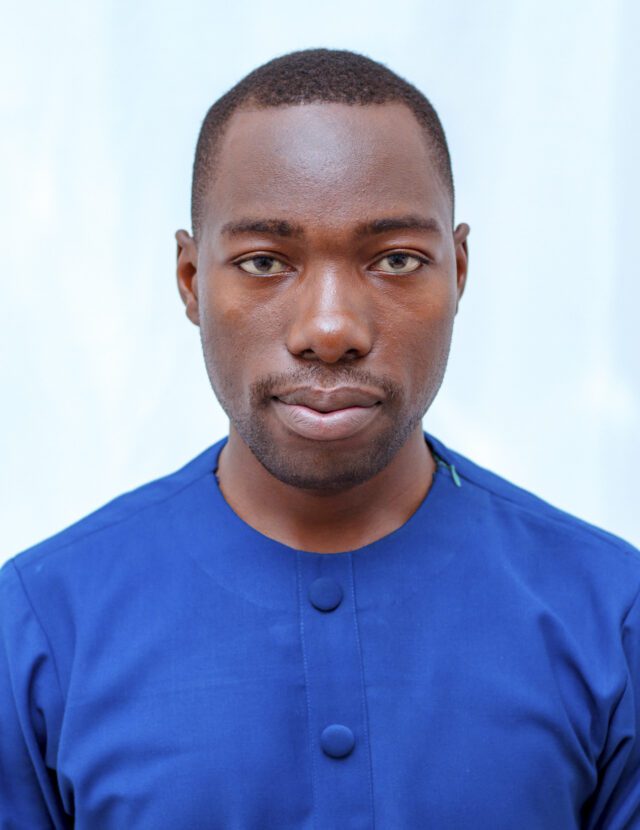
Biography: My name is Julius Mgaya, from Tanzania, East Africa. I hold a Master of Arts in History from St. Augustine University of Tanzania, awarded in 2021. Currently, I serve as an Assistant Lecturer in History at the University of Dar es Salaam, with nearly four years of experience teaching and supervising undergraduate seminars. My teaching covers African and European history, particularly the histories of Tanzania, East Africa, West Africa, and Southern Africa. Beyond teaching, I have conducted academic research and published two journal articles. My research interests include urban and environmental history, social history, military history, and diplomatic history. In addition, I was selected for the SMUS PhD Training Programme held at Technische Universität Berlin between May and October 2025. I have also been awarded a three-year (2026-2029) doctoral scholarship to pursue research at the Universität of Freiburg, Germany, where I am currently a PhD candidate in History.
PhD Thesis Working Title: A History of Public Open Spaces in Post-Colonial Dar es Salaam, Tanzania
Abstract: Despite the growing emphasis in the United Nations Sustainable Development Goals that by 2030 there should be universal access to safe, inclusive, accessible, green, and public spaces, the global situation remains far from this vision. In many parts of the world, existing public open spaces are rapidly declining in both quantity and quality, as is the case in Dar es Salaam city in Tanzania. This problem is especially critical in the Global South, particularly in Sub-Saharan Africa. In this part, in many fast-growing African cities such as Lagos (Nigeria), Accra (Ghana), Luanda (Angola), Johannesburg (South Africa), Lilongwe (Malawi), Nairobi (Kenya), and Dar es Salaam (Tanzania), urban open spaces are depleting at an alarming rate. These spaces are vital for comfort, relaxation, and social interaction through recreation and community gatherings. The degradation and decline of such spaces undermine urban residents’ access to, control over, and use of these spaces for their intended purposes. Consequently, the current and future sustainability of urban environments and the daily lives of urban communities are increasingly endangered by the ongoing loss of open spaces. Although this concern is widely recognized in Dar es Salaam, limited attention has been paid to examining the historical changes and continuities of urban open spaces over the decades and their impact on urban users. Therefore, this study seeks to historicize the evolution of public open spaces in post-colonial Dar es Salaam, Tanzania. The central argument of this study is that the daily lives of urban dwellers are increasingly threatened by the continuous encroachment and conversion of public open spaces into buildable land and other uses. Existing studies have not adequately situated this problem within its historical trajectory. The main objective of this study is to trace the evolution of public open spaces amid urbanization and the pursuit of sustainability in post-colonial Dar es Salaam. Specifically, trace the evolution of public open spaces in post-colonial Dar es Salaam, to examine how the state and urban communities have responded to the encroachment and conversion of these spaces, explore how urban communities have developed coping strategies to address their decline, and investigate how public open spaces have been protected and conserved by different users across time and space. Collectively, these objectives seek to provide a comprehensive understanding of the social, political, and environmental dynamics shaping the changing nature of public open spaces in the city. The study will be guided by the theories of political ecology and collaborative governance. It will employ a mixed-methods approach to address the complex historical depletion of public open spaces in Dar es Salaam. Combining qualitative and quantitative methods will help capture both the social dynamics and spatial transformations associated with this decline. Primary and secondary data will be collected through archival research, library materials, interviews, and field observations. Integrating these methods will enable a holistic understanding of both the physical extent of spatial depletion and the social and institutional narratives that explain why and how these changes have occurred.