


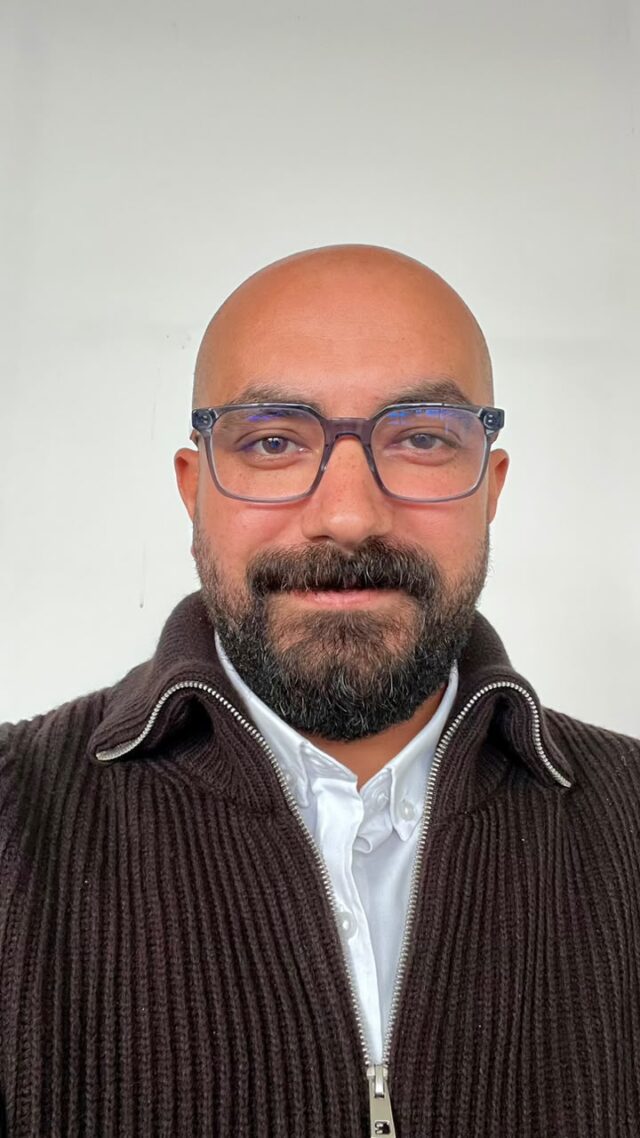
Biography: Ahmad Helmy is an Assistant Professor of Architecture and Urban Planning at Misr International University (MIU) in Cairo. His research examines how digital technology reshapes cities and planning. He also coordinates the Computational Architecture specialisation track and the department’s international academic relations. He holds a PhD (2022) and an MSc (2016) in Urban Planning from Ain Shams University; his doctoral research analysed how information and communication technology and e-commerce change commercial activities and the urban fabric of Greater Cairo.
As a 2026 SMUS Post-Doctoral Fellow at the Institute for Urban and Regional Planning (ISR) of Technische Universität Berlin, hosted by Prof. Dr. Lech Suwala, he developed AI4IU, a research project on AI-supported participatory planning in a Global North–South dialogue. In addition, he is the founder of the Architectural Design Platform (ADP), a design practice working in Egypt and the MENA region.
PhD Thesis Working Title: AI4IU – Artificial Intelligence for Inclusive Urbanism: A Global North–South Dialogue on AI-Supported Participatory Planning.
Abstract: Many German cities now use online platforms that let residents comment on planning projects directly on a digital map. These platforms collect thousands of comments, but planners struggle to analyse them, and residents rarely see how their input changes a plan. At the same time, more than one billion people worldwide live in informal settlements, where planning data is scarce and residents are usually left out of planning decisions.
AI4IU (Artificial Intelligence for Inclusive Urbanism) addresses both problems. It builds an artificial intelligence (AI) layer on top of DIPAS, the open-source participation platform developed by the City of Hamburg. The AI layer works in three phases: residents mark problems and ideas on a map; the AI sorts and summarises them by topic and location, building on Hamburg’s DIPAS analytics pilot; and it then drafts two or three planning options, which residents review, correct and rank. Residents who cannot read or write, or who have a disability, can also give their input by speaking.
The tool is first tested with Hamburg data and then taken to an informal settlement in Cairo, Egypt. Together with Misr International University and a local community organisation, residents test the tool in community workshops held in Arabic. The project examines how well the AI works where official data is missing, and whether giving AI-drafted plans back to residents leads to real changes rather than symbolic participation.
Unlike many technology projects, AI4IU does not simply export a German tool to the Global South. With the Berlin-based German Institute of Urban Affairs (Difu), it assesses which solutions developed in Cairo, such as lighter workshops or spoken input, are useful for German municipalities, with Berlin as the first case, and validates them with Berlin practitioners. The results go to German cities, the team behind Berlin’s mein.berlin.de and the DIPAS community.
The project is hosted at the Chair of Urban and Regional Economics at Technische Universität Berlin and runs for four years. Its results include a tested, openly available framework, a practical toolkit for planners and community organisations, and scientific publications. It aims to make digital participation fairer, more accessible and more useful, both in informal settlements and in German cities.