






Joel Ongwech
The 2025 SMUS–APRI Urban Africa Post-Doctoral Research Scholarship Programme was designed to strengthen postdoctoral researchers’ ability to communicate findings on urban “wicked problems” in African cities to policymakers and the public at large through a series of policy briefs.
The resulting APRI special series, “Wicked Urban Problems in African Cities: Rethinking Policy and Practice”, comprises four briefs by Dr Mildred M. Ambani Songoro, Dr Calvince Ouko Othoo, and Dr Emmanuel Amponsah, with guest contributors Mourice Wambua Kausya and Brunilde Verrier. Each brief tackles a distinct urban challenge: a failed transit system, a broken mapping workflow, corruption in water provision, and the persistence of illegal electricity connections. Read together, the briefs highlight a recurring urban policy dilemma in which behaviours treated as problematic are often rational responses to conditions of systemic exclusion.
The wicked urban problems highlighted in the policy briefs are systemic, politically contested and mutate as actors respond to attempted fixes, so that one-dimensional fixes generate new harms rather than resolving existing challenges. These recurring paradoxes, or “wicked problems,” as Rittel & Webber (1973) call them, form the theoretical basis of this series.
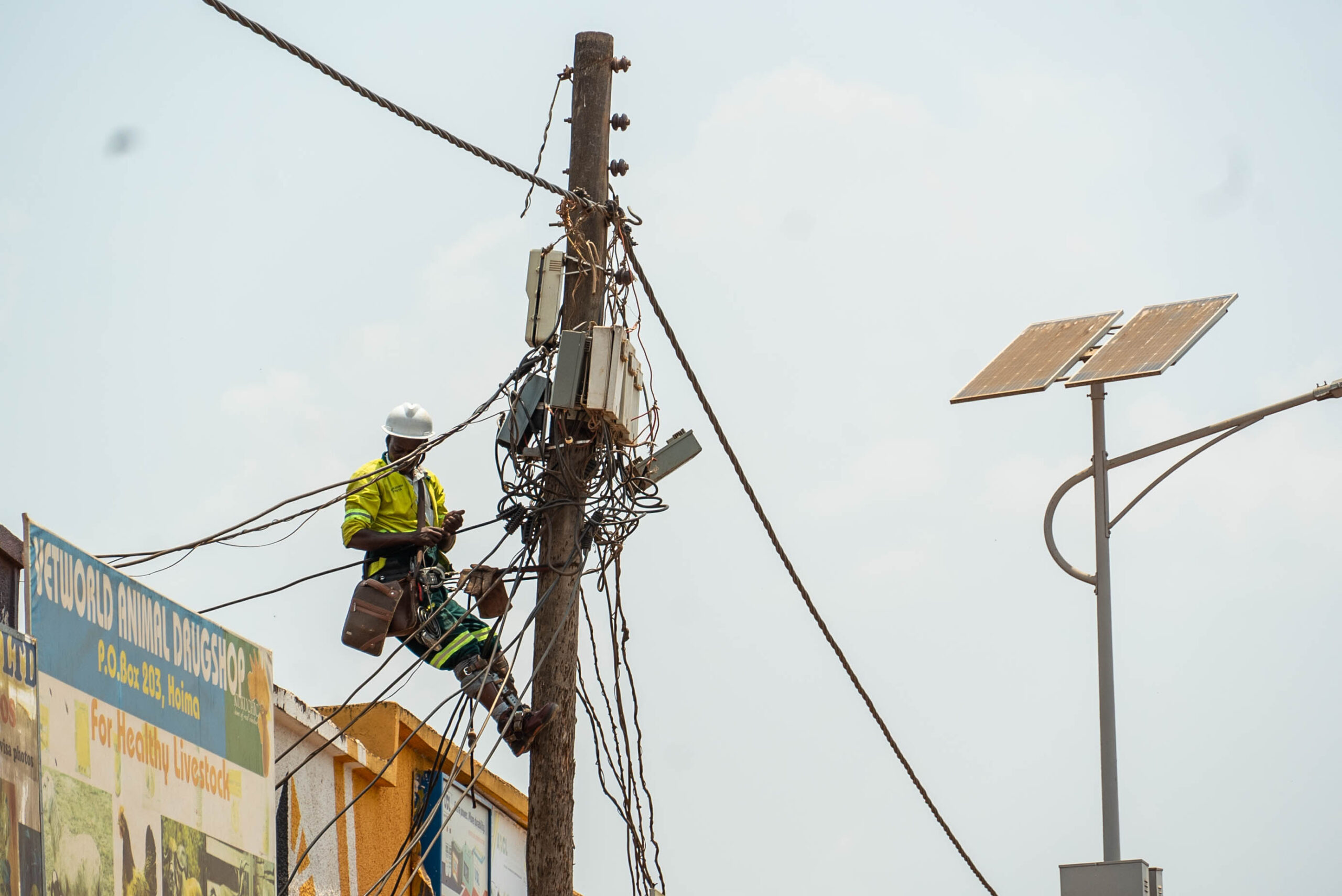
Informal electricity in Mathare, Nairobi
Using participatory systems mapping, special guest contributors to the policy brief series, Mourice Wambua Kausya and Brunilde Verrier, show how informal electricity provision in Mathare is woven into community livelihoods, sustained by affordability constraints and reinforced by punitive enforcement cycles that cut supply to whole neighbourhoods without touching the underlying drivers. Although formal electricity supply exists in Mathare, its costs, paperwork and punitive enforcement make it an unattractive option for most households, who instead choose to connect with informal suppliers, exposing residents to personal and legal risks (Satterthwaite, 2017).
Emblematic of the wicked problem, each crackdown reinforces residents’ belief that the formal system is not designed to serve them (Amankwaa & Gough, 2022). Consequently, informality deepens.
Summary
To read the full policy brief, please click on the image above or on the following DOI link: https://doi.org/10.59184/pb026.03.